- Why the confirmed Audemars Piguet novelties 2026 deserve more than launch-week attention
- RD#5 brings Audemars Piguet’s 2026 technical message into sharp focus
- Why RD#5 matters beyond the headline complications
- The new openworked perpetual calendars show AP refining complexity, not just displaying it
- Why the Code 11.59 angle matters
- The Neo Frame Jumping Hour gives the year a historical complication with a fresh identity
- How the Neo Frame improves the balance of the 2026 lineup
- What ties the Audemars Piguet 2026 creations together
- How to read Audemars Piguet novelties 2026 as a collector or buyer
- Final takeaway
 27.02.2023How to choose Audemars Piguet watch
 26.12.2017How to choose Breitling watch
- Phone +971 50 921 09 61
- E-mail mail@12-24.com
Audemars Piguet Novelties 2026: The Official Guide to This Year’s Confirmed Creations

Fashion editor
30 April 2026
~ 13 minutes
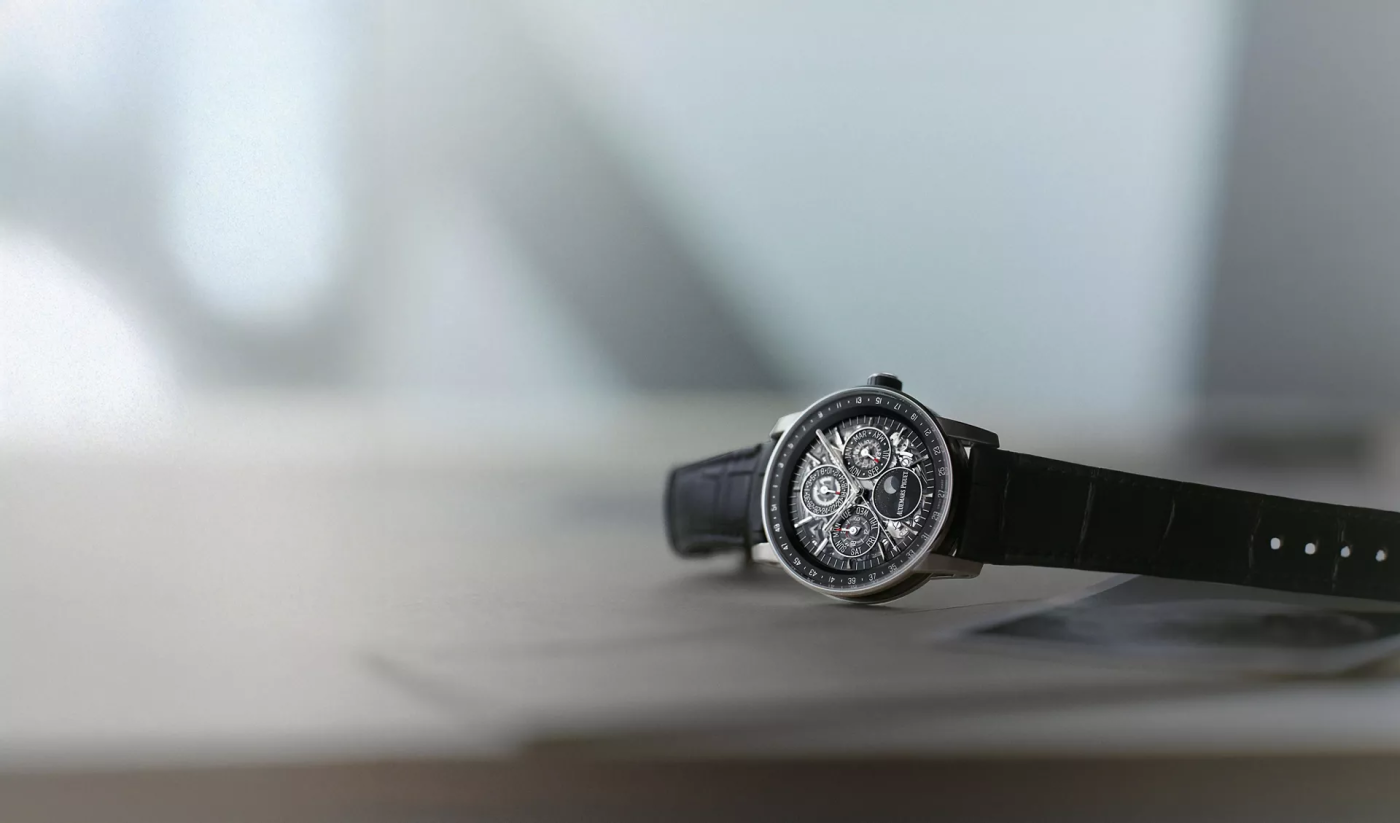
Audemars Piguet’s 2026 novelties feel less like a rushed trade-fair list and more like a controlled statement about modern high watchmaking: better ergonomics, stronger movement architecture, and a willingness to revisit historic complications without turning them into nostalgia pieces.
The search for Audemars Piguet novelties 2026 usually comes from a practical question. Readers want one dependable overview that tells them what the brand has actually confirmed this year, which watches matter most, and how those releases fit inside the broader AP identity. That is especially important in a novelty season when discussion can quickly slide into rumor, recycled launch-week chatter, or unsupported claims about price and allocation. For this article, the safest approach is the simplest one: stay with the official current-year evidence and build the analysis from there.
Audemars Piguet’s official 2026 Creations landing page frames the year as a selection of timepieces where technical mastery meets refined craftsmanship. That broad language becomes much more useful when it is connected to model-level pages. The current packet already contains exactly the kind of support a year-specific SEO article needs: an official 2026 novelties hub, a dedicated official page for the Royal Oak Extra-Thin Selfwinding Flying Tourbillon Chronograph RD#5, an official story for the new openworked perpetual-calendar watches powered by Calibre 7139, and an official collection page for the Neo Frame Jumping Hour. Together, those sources provide enough evidence to discuss the 2026 lineup as a set of confirmed releases rather than a mood board.
That distinction matters. A weak year-specific article often tries to stretch a single event page into a full buying guide. This one does not need to do that. The official pages already describe a world-first touch-sensitive chronograph solution in RD#5, a new in-house selfwinding perpetual-calendar movement for two 41 mm openworked models, and a selfwinding jumping-hour watch that connects modern design with one of the oldest digital-style display concepts in horology. These are not tiny cosmetic updates. They are clear signals about where Audemars Piguet wants to place its energy in 2026.
There is also a valuable evergreen angle here. Even though the watches belong to the current novelty cycle, the reader intent behind the keyword is not simply “what happened at the fair?” It is closer to “which Audemars Piguet launches define 2026, and what makes them technically or aesthetically important?” That is a better question, and it leads to a better article. Instead of duplicating a straight event-news summary, the guide below focuses on what each confirmed release contributes to the brand’s present-day collection story.
In practice, the 2026 picture looks especially coherent because the watches address different parts of Audemars Piguet’s personality at once. RD#5 speaks to technical refinement inside a familiar sporty-luxury language. The new perpetual-calendar pair shows how openworking and ergonomics can evolve together. The Neo Frame Jumping Hour reaches back into the brand’s historical relationship with jumping-hour displays while presenting the result in a case concept that feels contemporary rather than archival. For collectors, that range makes the lineup more interesting than a single-idea novelty year.
Why the confirmed Audemars Piguet novelties 2026 deserve more than launch-week attention
Not every watch brand uses a novelty year to say something durable. Sometimes new releases serve mainly to refresh colors, keep a collection visible, or create a short cycle of social-media excitement. The official 2026 AP material suggests a different approach. Even at the summary level, the brand presents the year as a dialogue between tradition and innovation, but the model-specific pages give that phrase real substance. The recurring themes are not hype words. They are ergonomics, legibility, mechanical efficiency, and historically informed design.
That is a promising combination for readers using the keyword “Audemars Piguet novelties 2026.” Most of them are not looking for a generic list of references. They want confirmation that the watches are genuinely current-year creations, enough factual detail to separate meaningful launches from simple variants, and some editorial help in understanding which pieces matter strategically. Official sources cannot answer every commercial question, but they can support a reliable first reading of the collection.
What stands out first is that AP is not presenting 2026 as one single-style year. The releases in this brief cover a highly engineered Royal Oak complication, a pair of openworked perpetual calendars that place movement architecture at the center of the visual experience, and a Neo Frame Jumping Hour that revives a historic display principle in a dramatic pink-gold-and-sapphire form. That diversity matters because it shows the brand is not chasing one trend. It is reinforcing several pillars of identity at the same time.
It also means the reader should resist the temptation to rank every release by sheer spectacle. RD#5 may generate the most immediate technical conversation because of its patented chronograph work and the promise of intuitive push-piece feel. The openworked perpetual calendars may matter more to buyers who watch the evolution of AP’s movement platform. The Neo Frame Jumping Hour may appeal most to collectors who respond to shaped design and historically rooted complications interpreted in a fresh way. A useful guide should let those differences stay visible.
Another reason this year deserves a closer look is that the official facts are already enough to support a serious article without guesswork. AP’s pages provide movement names, complication descriptions, performance details such as power reserve and frequency, and design framing. What they do not provide in this brief—retail pricing, limited-edition numbers, or speculative market outcomes—should simply remain outside the article. That discipline makes the page more useful for a reader who wants a dependable baseline before the usual secondary-market noise starts drowning out the product itself.
RD#5 brings Audemars Piguet’s 2026 technical message into sharp focus
If one watch best captures the engineering spirit of the Audemars Piguet novelties 2026, it is the Royal Oak Extra-Thin Selfwinding Flying Tourbillon Chronograph RD#5. AP’s official page does not present it as a simple extension of the Royal Oak family. It frames the watch as a solution to a design challenge: how to create a complicated timepiece that feels comfortable, intuitive, and genuinely suited to contemporary wear. That wording matters because it shifts the emphasis from complication count alone to the lived experience of using the chronograph.
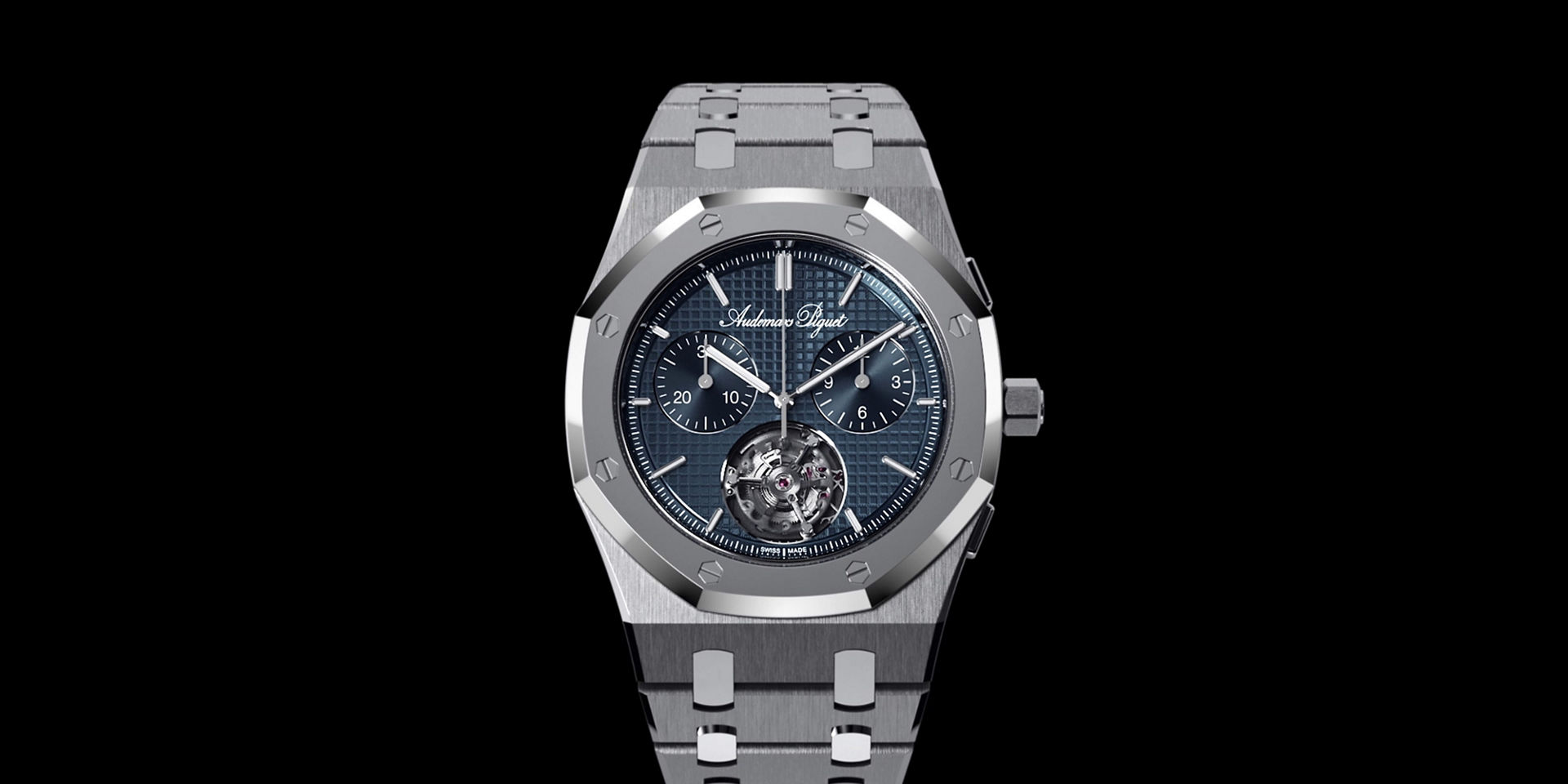
The most distinctive official claim is the world-first touch-sensitive push-piece system. In the same source, AP also highlights an instantaneous jump minute counter and states that the watch uses the new Calibre 8100. Those details make RD#5 significant beyond the usual luxury-sports-watch conversation. The watch is not merely a Royal Oak with an extra layer of mechanical prestige. It is presented as a rethinking of the chronograph reset mechanism and of how a high complication can feel in daily interaction.
That angle is especially important in 2026 because ergonomics is often discussed far more loosely than it is engineered. Many brands describe comfort as a by-product of thinner cases or lighter materials. AP is more specific here. The official text says RD#5 emerged from a comprehensive ergonomic study and from collaborative work across movement, case, and design teams. Even if the reader never handles the watch, that framing tells us how the brand wants the release to be understood: not just as a technical trophy, but as a complication designed around modern expectations of usability.
There is also an interesting tension in the way RD#5 is positioned. On one hand, it sits inside the instantly recognizable Royal Oak visual language and uses the iconic “Jumbo” case context. On the other hand, the page insists on refined visual simplicity rather than visual overload. That balance is part of why the watch matters editorially. It suggests that AP is trying to prove that a highly complicated sports watch can become more intuitive and more legible without losing the emotional charge that collectors expect from a halo release.
Why RD#5 matters beyond the headline complications
Collectors already understand that a flying tourbillon chronograph is not an everyday commodity category. The deeper relevance of RD#5 is what it says about the brand’s current priorities. AP is taking a classic point of high-watchmaking status—the chronograph complication—and asking whether the interface itself can be improved in a meaningful way. That is a more interesting design question than simply adding another visible complication to a familiar platform.
It is also a reminder that the phrase “innovation” should mean something concrete. In watch marketing, innovation is often reduced to a new material, a color, or a limited run. Here, the official facts support a stronger claim. A patented approach to energy storage and release inside Calibre 8100, combined with touch-sensitive push-pieces and an instantaneous jump minute counter, gives readers real technical points to evaluate. Even if RD#5 remains a niche reference in terms of ownership, it becomes one of the most important AP watches of 2026 because it shows how the brand thinks research and development should appear in finished product form.
For buyers and followers of the Audemars Piguet catalogue, RD#5 also sets the tone for the rest of the year. It says 2026 is not about safe line maintenance. It is about making the conversation more specific. AP wants people to look at functional refinement, not only at outward prestige. That is a sophisticated message, and it helps explain why RD#5 anchors the whole novelty season so effectively.
The new openworked perpetual calendars show AP refining complexity, not just displaying it
The second major story in the Audemars Piguet novelties 2026 lineup comes from the official page titled “A New Chapter in Openworked Perpetual Calendars.” This source is especially valuable because it gives the article something more than a single-model spotlight. It describes a new in-house selfwinding perpetual calendar openworked movement, Calibre 7139, and explains that it debuts in two 41 mm watches. One belongs to the Royal Oak family in titanium and Bulk Metallic Glass, and the other becomes the first openworked perpetual calendar in Code 11.59 by Audemars Piguet.
That alone would make the release notable, but the official page adds more substance. AP says the movement is 4.1 mm thick, operates at 4 Hz, and delivers a 55-hour power reserve. It also emphasizes an “all-in-one” crown correction system and a more harmonious calendar display designed to improve legibility. These points matter because perpetual calendars are often admired from a distance while remaining slightly intimidating in practical terms. A perpetual calendar can be mechanically impressive and still feel too delicate or awkward in use. AP’s 2026 language pushes in the other direction by treating user interaction and visual clarity as part of the technical achievement.
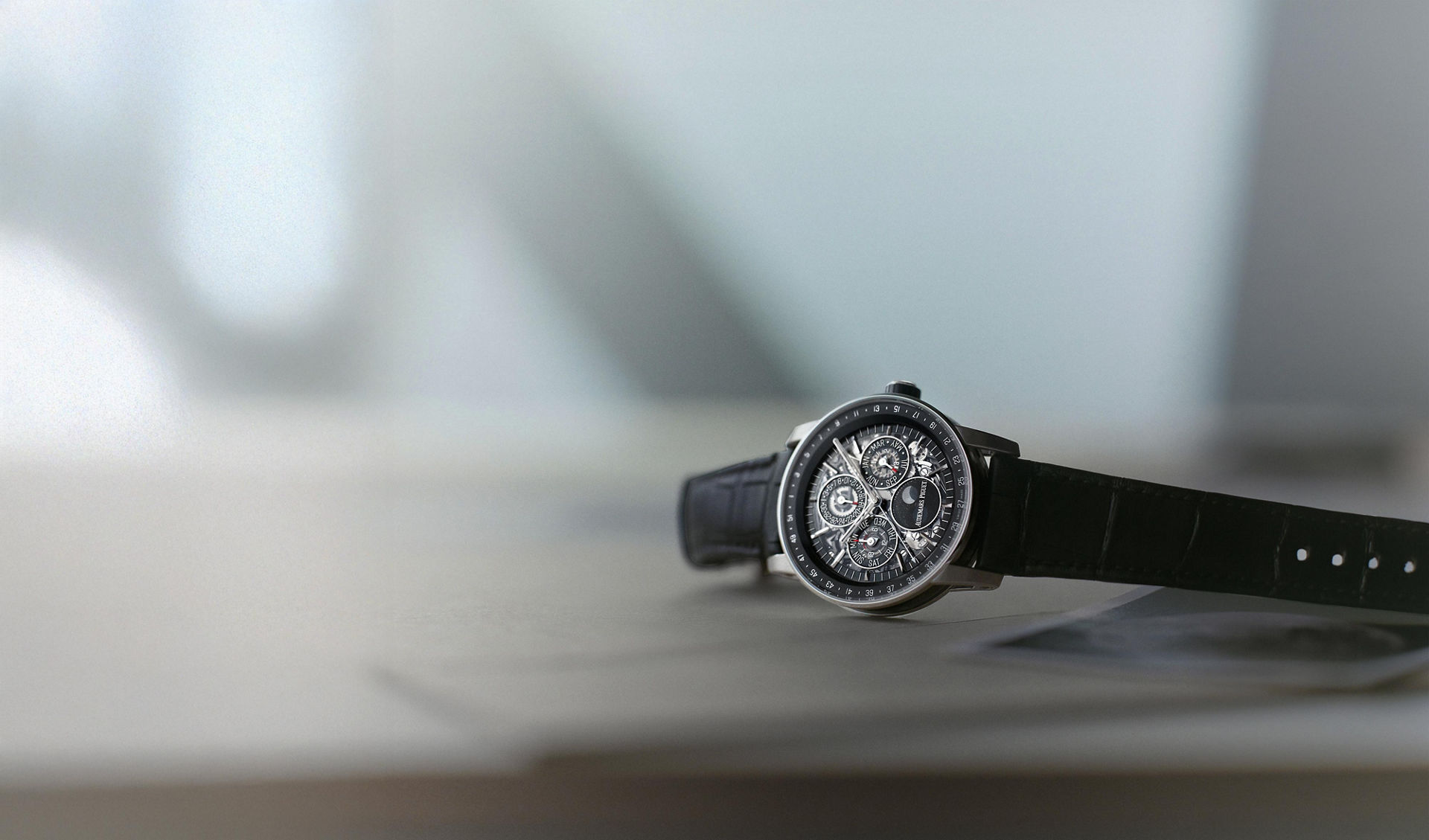
Openworking changes the character of that achievement. When the brand describes hand-finished openworked bridges and plates and says each reflects more than 30 hours of haute horlogerie craftsmanship, the point is not simply that the movement has been made visible. It is that the architecture itself is intended to carry aesthetic weight. In other words, the watches are not asking the wearer to choose between technical density and visual depth. The product story depends on both.
This makes the release particularly useful for evergreen search intent. Readers looking up AP novelties 2026 often want to know not only what launched, but what actually progressed in the collection. Calibre 7139 seems to answer that question directly. It updates how AP presents the perpetual calendar as an object of daily interaction, and it does so across two different design languages rather than in one isolated experiment.
Why the Code 11.59 angle matters
The official confirmation that Calibre 7139 appears in the first openworked perpetual calendar for Code 11.59 by Audemars Piguet is one of the most revealing facts in the whole 2026 brief. Code 11.59 has always carried the burden of interpretation: some collectors read it as AP’s most forward-looking formal collection, while others treat it as a line that still needs continuous definition beside the gravitational pull of Royal Oak. Giving it the first openworked perpetual calendar in the family is a strong answer to that tension.
It tells readers that AP is willing to use Code 11.59 for serious movement-led statements, not only for stylistic experimentation. That matters because collection identity at the high end is built through repetition of important ideas. When a brand entrusts a family with an advanced complication and a new movement platform, it raises the status of that family inside the catalog. The watch becomes more than a novelty; it becomes evidence of long-term commitment.
The Royal Oak version, meanwhile, serves a different purpose. It anchors the same movement in a case language that many AP buyers already understand instinctively. Together, the two watches show something valuable about the 2026 approach: AP is not trying to prove one aesthetic thesis. It is trying to prove that its current movement work can thrive in very different visual environments. That makes the story richer than a one-watch launch and gives the reader a clearer sense of breadth.
The Neo Frame Jumping Hour gives the year a historical complication with a fresh identity
The Neo Frame Jumping Hour may be the most stylistically unconventional watch in this article, but it plays an essential role in understanding Audemars Piguet novelties 2026 as a whole. The official collection page says the watch revives a historic complication dating back to 1650, where numbers jump every 60 minutes instead of relying on traditional hands. That heritage angle is important, yet AP does not present the piece as a museum-style reenactment. The surrounding language stresses modern innovation, shock resistance, and a new selfwinding movement rather than mere homage.
Powered by Calibre 7122, the Neo Frame Jumping Hour is described as Audemars Piguet’s first selfwinding jumping-hour movement. The source also states a 52-hour power reserve and emphasizes Haute Horlogerie finishing. Those are substantial facts because jumping-hour displays can easily become novelty complications with more visual charm than technical substance. AP is working hard to avoid that reading. By framing the movement as the brand’s first selfwinding jumping-hour calibre, it positions the watch as a serious development piece rather than an eccentric side project.
The case and dial treatment reinforce that impression. According to the official page, the Neo Frame uses a pink-gold-and-sapphire case with gadroons and aerodynamic lugs, plus a black sapphire dial with dual apertures. That is an unusually specific design language, and it helps the watch avoid the obvious trap of historical revivalism. The reference acknowledges older jumping-hour traditions, but visually it aims for something bolder and more sculptural. For readers, that makes the watch memorable even if it sits outside the most commercially familiar AP families.
There is also a broader historical point worth noting. The official quote on the page connects the watch to Audemars Piguet’s pioneering role in developing jumping-hour watches in the 1920s. That is useful context because it shows the release is not borrowing a complication from nowhere. The brand is revisiting part of its own archive, but the execution is built around present-day materials and architecture. In that sense, the Neo Frame becomes a strong example of how a heritage-based novelty can still feel genuinely new.
How the Neo Frame improves the balance of the 2026 lineup
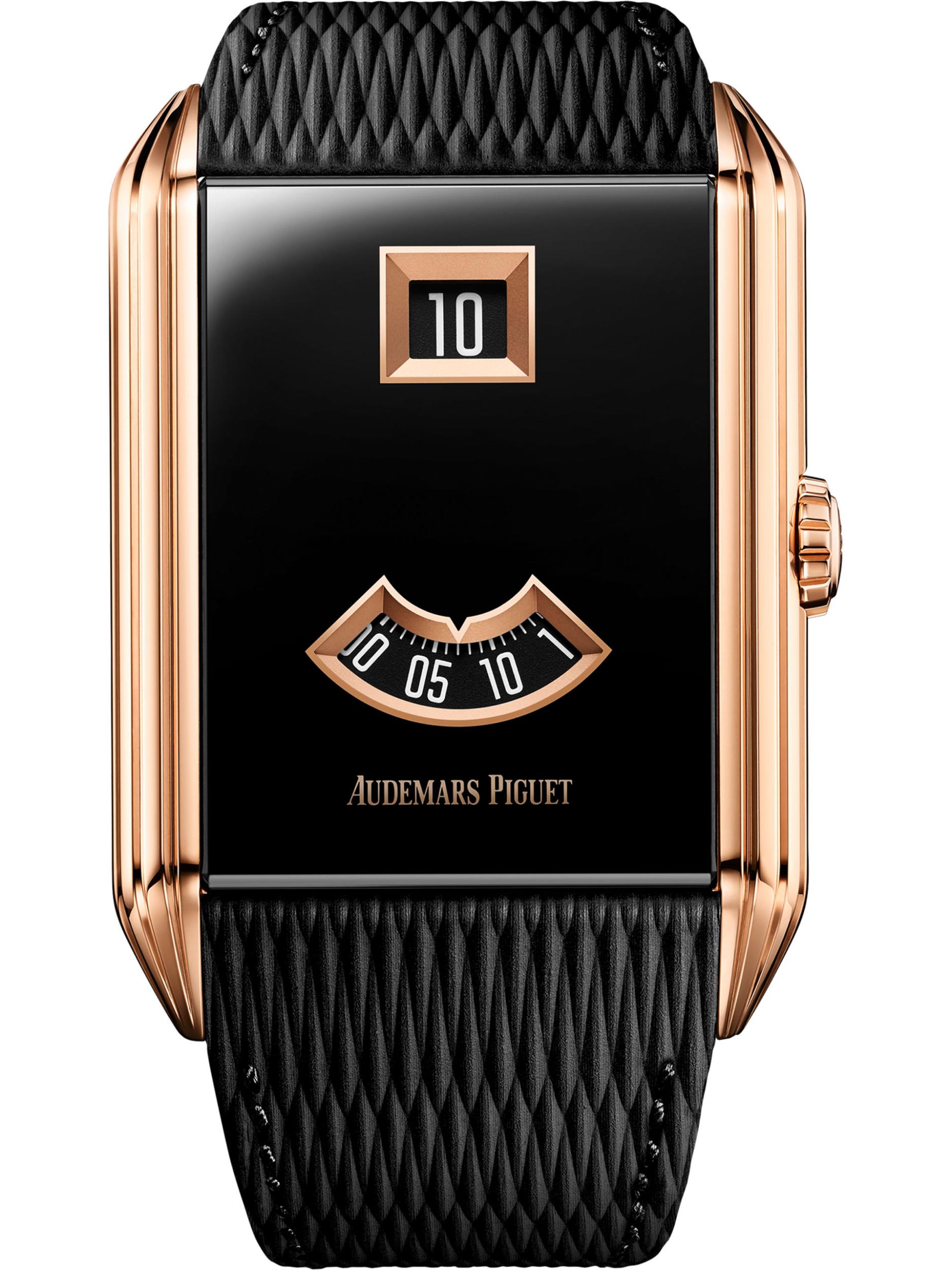
Without the Neo Frame Jumping Hour, AP’s 2026 confirmed story might read as a very coherent but slightly predictable narrative about elite complications and ergonomic refinement inside established codes. The Neo Frame changes that. It adds a piece that is intellectually connected to AP history but visually independent enough to widen the conversation. That matters because a great novelty year should not look monotonous, even when it is disciplined.
It also gives collectors a different kind of entry point into the season. Not every serious buyer is looking for a flying tourbillon chronograph or an openworked perpetual calendar. Some are drawn to unusual displays, shaped cases, or watches that express watchmaking history through design rather than through sheer complication hierarchy. The Neo Frame serves that audience well. More importantly, it proves that AP’s 2026 imagination is not limited to optimizing familiar prestige categories. The brand is still willing to take formal risks when the concept is strong enough.
What ties the Audemars Piguet 2026 creations together
Once the three main threads are placed side by side, the underlying structure of the year becomes easier to see. RD#5 is about intuitive performance in a highly complicated sports-watch format. The Calibre 7139 perpetual calendars are about making classical complexity more ergonomic, more legible, and more visually transparent. The Neo Frame Jumping Hour is about bringing a historic display into a selfwinding, materially contemporary object. These are different watches, but they all share a concern with how the wearer experiences sophistication.
That is why the official 2026 language about tradition and innovation does not feel empty in this case. AP is not just pairing old and new as a branding reflex. Each release in the brief takes a recognized watchmaking idea and pushes it through a modern filter. In RD#5, that filter is touch-sensitive chronograph ergonomics. In the perpetual calendars, it is intuitive crown correction, slim architecture, and openworked legibility. In the Neo Frame, it is the transformation of a historical jumping-hour principle into a bold sapphire-forward design.
There is another important shared feature: none of these watches needs speculation to justify its place in the article. The official facts are already meaningful. That makes the 2026 AP story unusually well suited to a long-form evergreen guide. Instead of padding the text with rumor, resale mythology, or event gossip, the article can stay focused on what has actually been confirmed and why those confirmations matter. For serious readers, that is much more valuable than a louder but less disciplined roundup.
From a buyer’s perspective, the year also shows AP managing range intelligently. The lineup is not flattened into one lifestyle message. A collector can admire RD#5 for research-led complication design, study Calibre 7139 for its broader collection implications, or respond to the Neo Frame for its design daring and horological lineage. That spectrum gives the brand a stronger 2026 identity because it demonstrates both confidence and versatility.
How to read Audemars Piguet novelties 2026 as a collector or buyer
If you are researching Audemars Piguet novelties 2026 with purchase intent, the first useful step is to separate product significance from personal suitability. RD#5 may be the headline technical watch in the group, but not every collector wants a highly visible halo complication. The openworked perpetual calendars may represent the most balanced expression of movement innovation and collection strategy, especially for readers already interested in how AP develops both Royal Oak and Code 11.59. The Neo Frame may be the most compelling option for those who value originality and historical complication culture over straightforward familiarity.
The second step is to judge each release according to the role it is meant to play. A common mistake in novelty-season reading is to ask which watch is “best” in the abstract. That question usually leads nowhere. It is far more useful to ask what each watch is trying to accomplish. RD#5 is trying to make advanced chronograph use feel more intuitive. The Calibre 7139 pair is trying to modernize the perpetual-calendar experience while exposing the movement’s architecture. The Neo Frame is trying to revive the jumping hour in a way that feels assertively contemporary. Once those goals are clear, the lineup becomes easier to understand.
The third step is restraint around missing information. The official materials in this source packet support a strong article, but they do not establish retail pricing, production size, or market trajectory. A careful reader should see that as a reason for patience, not for speculation. The value of an official-source guide is that it tells you what is real now. Later commercial details can refine a buying decision, but they should not be invented in the first pass.
That may sound conservative, yet it is exactly what makes a year-specific evergreen article useful months after the first launch wave. The reader can return to it for a stable map of the confirmed 2026 creations: which models existed, what their official technical claims were, and why they mattered inside the brand’s ongoing story. In a category crowded with fast-twitch commentary, that kind of clarity ages better.
Final takeaway
Audemars Piguet novelties 2026 stand out because the brand is not relying on one-dimensional launch theater. RD#5 turns a complicated Royal Oak into a statement about intuitive chronograph engineering. The new Calibre 7139 openworked perpetual calendars show that AP is serious about improving both interaction and legibility in a traditionally dense complication. The Neo Frame Jumping Hour proves that historical complications can still produce something visually unexpected when the movement and case concept are developed with conviction.
For collectors, that makes 2026 a year with real depth rather than a collection of interchangeable headlines. For buyers, it offers several different routes into the current AP story depending on whether the priority is technical innovation, collection evolution, or design originality. And for anyone searching this keyword with practical intent, the core conclusion is clear: the strongest way to understand Audemars Piguet’s 2026 creations is to begin with the official facts, because the facts themselves are already rich enough to support serious attention.
