
 30.04.2026 12:25:59OMEGA named Official Timekeeper of the 38th America's Cup in Naples
 30.04.2026 12:22:58Patek Philippe stages its Rare Handcrafts 2026 exhibition in Geneva

- Phone +971 50 921 09 61
- E-mail mail@12-24.com
Vacheron Constantin expands Métiers d’Art Tribute to Great Civilisations with four Louvre-linked editions
30 April 2026
~ 2 minutes
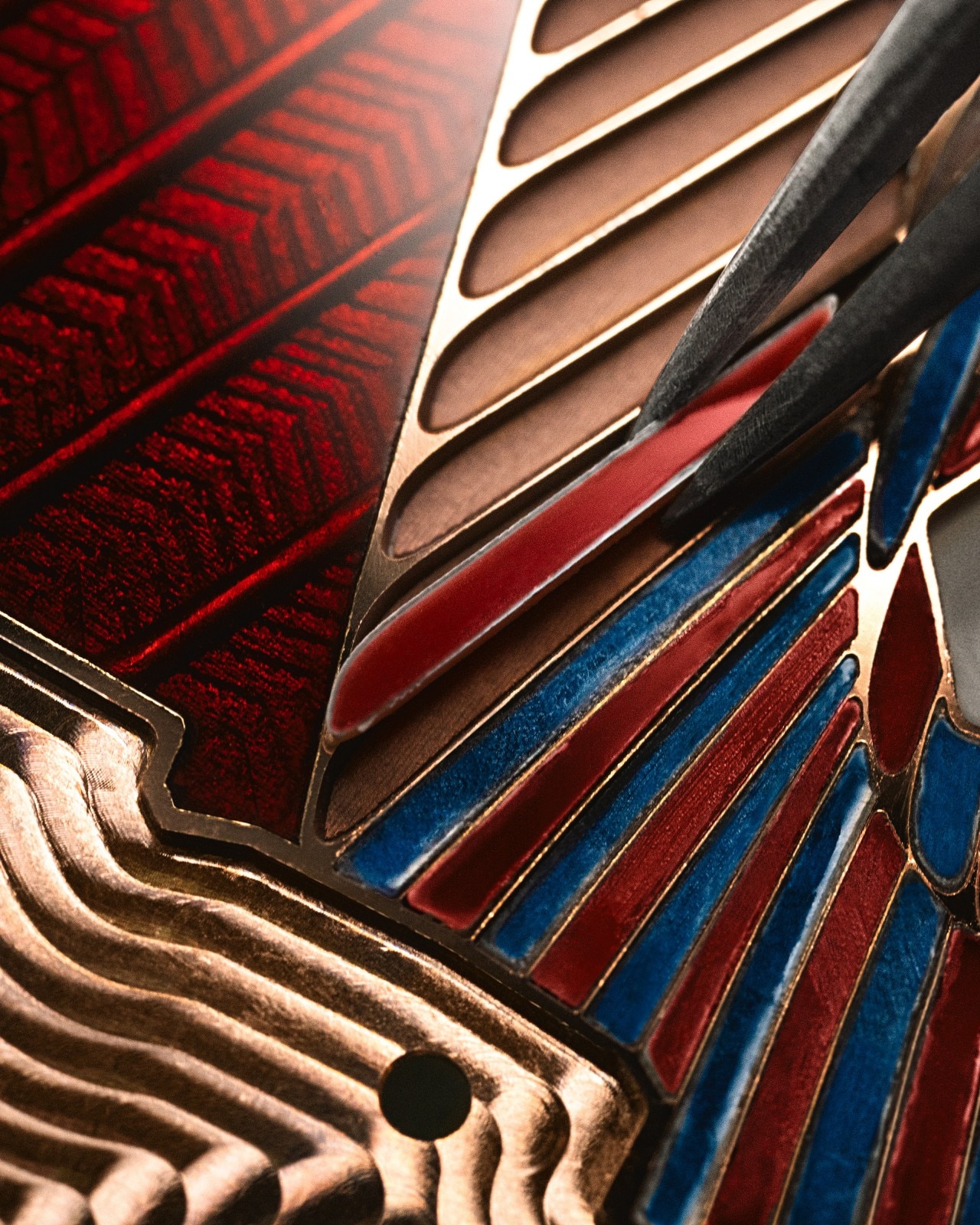
Vacheron Constantin has extended its Métiers d’Art Tribute to Great Civilisations line at Watches and Wonders 2026 with four new watches developed around works held by the Louvre. According to the brand’s official presentation page, the new series pays tribute to Pharaonic Egypt, the Assyrian Empire, Ancient Greece and Imperial Rome, continuing a partnership that places decorative craft at the center of the release rather than adding it as a secondary flourish.
The official collection page says each model is limited to 15 pieces. Vacheron Constantin names the four expressions as Ancient Greece – Athéna de Velletri, Egyptian New Kingdom – Buste d’Akhénaton, Neo-Assyrian Empire – Lamassu de Sargon II, and Imperial Rome – Tibre de l’Iseum Campense. That framing keeps the launch firmly in the brand’s métiers d’art territory: the historical subject is the headline, while the watchmaking details support the narrative.
Three official product pages currently provide model-level confirmation for the release. The Athéna de Velletri reference 7620A/000R-H081, Lamassu de Sargon II reference 7620A/000G-H080 and Tibre de l’Iseum Campense reference 7620A/000R-H079 are each listed in 42 mm cases with a thickness of 12.93 mm, 30-metre water resistance, a transparent sapphire caseback and Hallmark of Geneva certification. Vacheron Constantin also highlights distinct dial work tied to each civilisation, including Paros marble on the Athéna model, carved stone with hand patina on Lamassu de Sargon II and gold leaf, translucent enamel, marble and stone micro-mosaic details on Tibre de l’Iseum Campense.
The fourth watch, Buste d’Akhénaton, appears on the official release hub, although its separate product-page specifications were not available in the fetched source set. Even so, the overall launch is clearly positioned as one of Vacheron Constantin’s major high-craft presentations for the 2026 show. For collectors following Vacheron Constantin, this is a release built less around headline complications than around rare decorative execution, museum context and very limited production.

